🦶 Gout – What You Need to Know from a Primary Care Physician Georgetown TX

Gout is a form of arthritis that causes sudden, painful joint inflammation — often in the big toe. It’s surprisingly common, especially in adults over 40. While it can be intense, the good news is: it’s manageable.
At Wellness Bay Primary Care, our goal is to help you feel better fast, understand what’s causing it, and make simple changes to help prevent it from coming back.
🔍 What Is Gout and Why Does It Happen?
Gout is caused by uric acid crystals building up in the joints. Uric acid is a natural waste product that forms when your body breaks down purines — substances found in some foods and drinks.
Normally, uric acid is filtered through the kidneys and leaves your body through urine. But when:
You produce too much uric acid, or
Your kidneys can’t get rid of it efficiently,
…it builds up in the blood and forms sharp crystals in the joints — especially the feet, ankles, and knees.
⚠️ Risk Factors for Gout
➤ What Your Primary Care Physician Georgetown TX Will Consider
You may be more likely to develop gout if you have:
High blood pressure
Diabetes
Kidney disease
Obesity
A diet high in red meat or alcohol
Frequent use of diuretics or aspirin
A family history of gout
Male gender (more common in men)
Recent surgery, trauma, or fasting
🧩 Symptoms of a Gout Attack
Sudden, intense pain (often at night)
Redness and swelling
Warmth in the joint
Tenderness to the point where even bedsheets hurt
Limited movement during an attack
Attacks often begin in the big toe, but other joints may be involved.
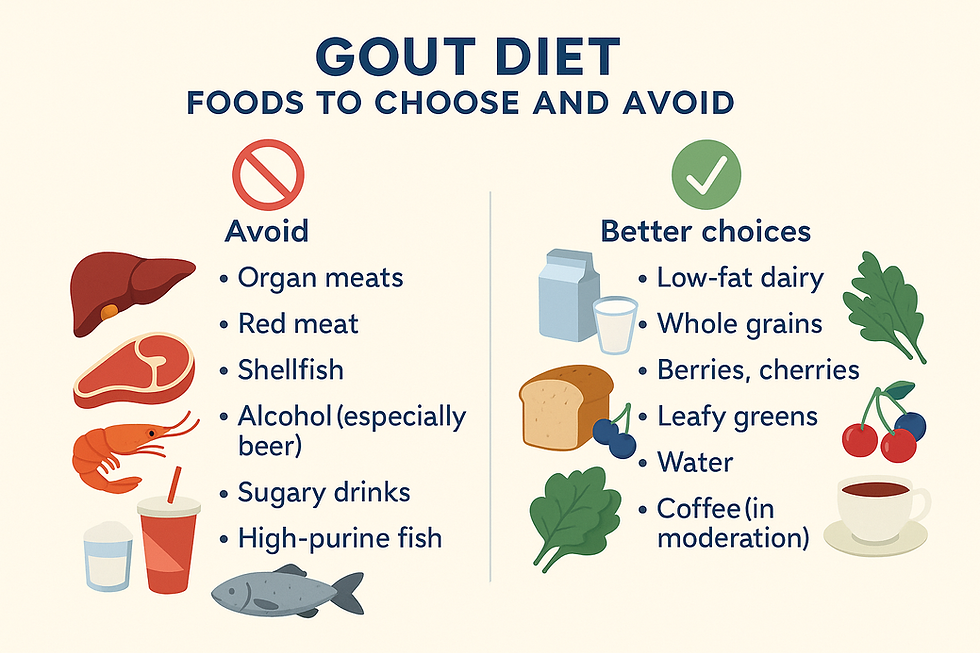
🍽️ Foods and Supplements to Avoid With Gout
Some foods are high in purines or can raise uric acid levels, making a flare more likely. Here’s what to cut back on or avoid:
🥩 Meats & Seafood:
Organ meats (liver, kidneys, sweetbreads)
Red meat (beef, lamb, pork)
Anchovies, sardines, mackerel, herring
Shellfish (shrimp, scallops, crab)
🧀 High-Fat Foods:
Full-fat dairy
Fried foods
Rich gravies or creamy sauces
🍺 Alcohol:
Beer (especially high in purines)
Spirits
Red wine (in excess)
🧁 Sugary Drinks & Foods:
Soda
Fruit juices
High-fructose corn syrup products
Candy and baked goods
💊 Supplements & Others:
Niacin (vitamin B3 in high doses)
Some protein powders (high-purine content)
Dehydration from poor water intake
At our family medical center of Georgetown TX, we review your diet and supplement routine so nothing is missed.
🥗 Foods That May Help Reduce Uric Acid
Low-fat dairy (milk, yogurt)
Leafy greens, fruits (especially cherries and berries)
Whole grains
Water and herbal teas
Coffee (in moderation may reduce gout risk)
Vitamin C-rich foods (or supplements under medical advice by your Primary Care Physician)
🧠 How to Prevent Gout Naturally
Stay hydrated (at least 8–12 cups of water daily)
Lose excess weight slowly and safely
Limit alcohol and sugary drinks
Move more — regular activity improves kidney function
Eat more plants, fewer animal products
Our team at your local family practice center helps you make these changes gradually, so they stick.
💊 Treatment Options for Gout
During an acute flare, treatments include:
NSAIDs (ibuprofen, naproxen)
Colchicine (prescription anti-inflammatory)
Corticosteroids (oral or injection)
To prevent future attacks, we may recommend:
Allopurinol or febuxostat to lower uric acid
Daily lifestyle adjustments
Monitoring with your internal medicine doctor near me
📈 Long-Term Outlook (Prognosis)
With the right care and consistent habits, most people with gout live healthy, active lives. Left untreated, repeated flares can cause:
Joint damage
Kidney stones
Chronic arthritis
We offer proactive care and monitoring at our Georgetown family medical clinic to prevent this from happening.
✅ Top 10 FAQs About Gout
1. Is gout curable?
Not exactly, but it’s very manageable with the right plan.
2. How long do attacks last?
A few days to a week. Early treatment shortens duration.
3. Can stress cause gout?
Stress can raise inflammation and uric acid levels, so it’s a factor.
4. What about vitamins?
Avoid high-dose niacin. Vitamin C may help — check with your doctor.
5. Should I avoid all meat?
No — just choose lean cuts and limit red meat. Fish in moderation is okay.
6. Can I exercise during a flare?
Rest during a flare, then ease back into movement.
7. Is gout always in the big toe?
Often, but knees, ankles, and elbows can be affected too.
8. Do women get gout?
Yes, especially post-menopause.
9. Can dehydration cause a flare?
Yes. Staying hydrated is essential.
10. Where can I get personalized care in Georgetown TX?
Right here at Wellness Bay Primary Care — with visits that never feel rushed.
🦶 Gout Relief Starts with Understanding
You don’t have to suffer in silence — or live in fear of another attack. Whether it’s your first flare or your tenth, we’ll walk you through it step-by-step with compassion and clarity.
📍 Visit us at 4887 Williams Dr Ste 107, Georgetown TX
📞 Call 512.588.7008 or📲 Book your visit online