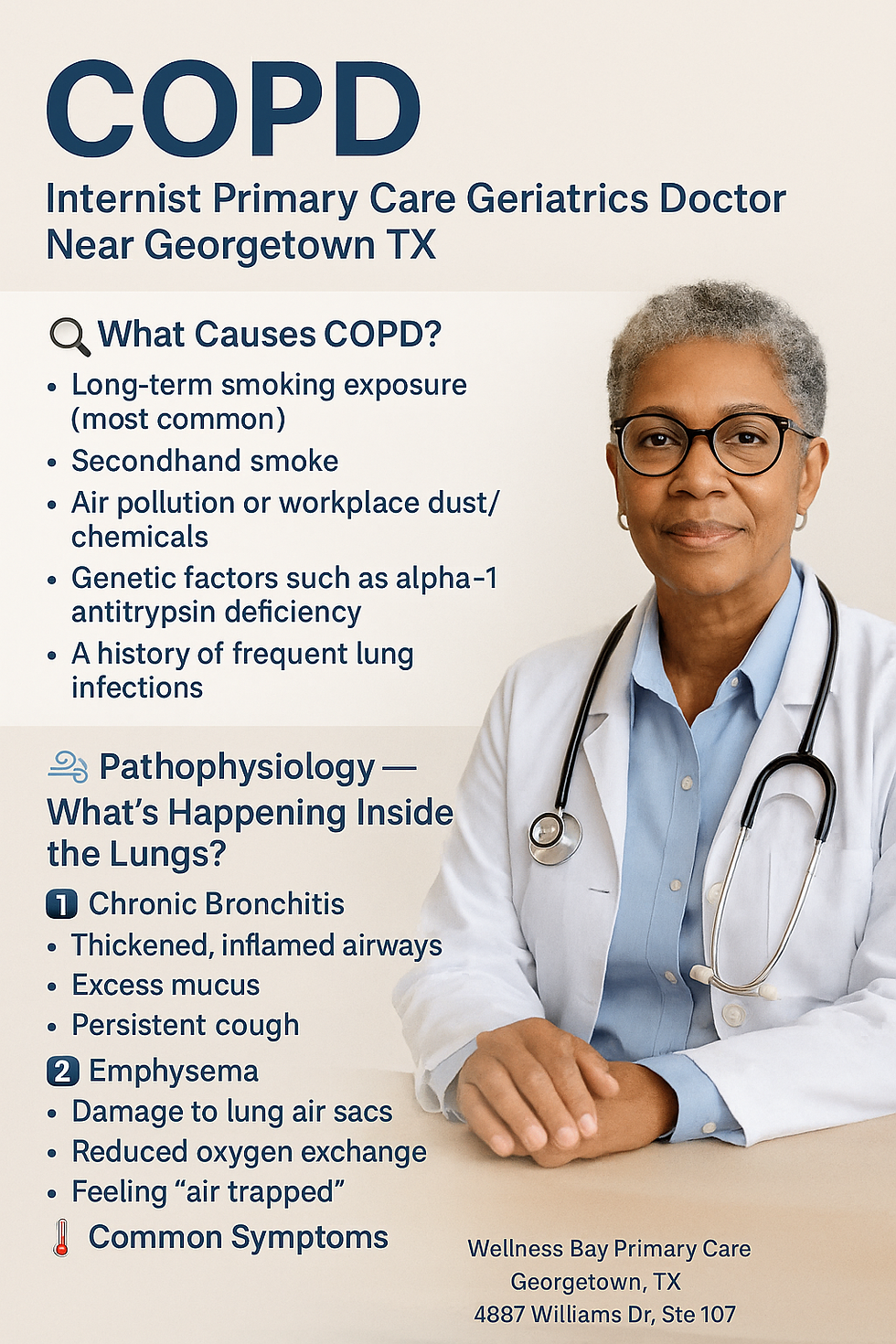
COPD | by Internist Primary Care Geriatrics Doctor Near Georgetown TX
- Dr. Mohammad Al Darawsha MD

- Dec 10, 2025
- 3 min read
Chronic Obstructive Pulmonary Disease (COPD) is a long-term lung condition that makes it harder to breathe over time. With the right care, lifestyle changes, and early treatment, many adults — including seniors — can stay active and maintain a great quality of life.
At Wellness Bay Primary Care in Georgetown TX, our Internist Primary Care Geriatrics Doctor provides gentle, personalized support to help you breathe easier and stay independent. 🌿💙
(SEO terms naturally included: primary care physicians near me, family doctor near me, internal medicine near me, comprehensive primary care, primary care physician Georgetown TX, Medicare primary care physician near me, family medical center Georgetown TX, georgetown adult medicine, georgetown senior care, etc.)
🔎 What Causes COPD?
COPD usually develops slowly over years. Common causes include:
Long-term smoking exposure (most common)
Secondhand smoke
Air pollution or workplace dust/chemicals
Genetic factors such as alpha-1 antitrypsin deficiency
A history of frequent lung infections
🌬️ Pathophysiology — What’s Happening Inside the Lungs? by Internist Primary Care Geriatrics Doctor Near Georgetown TX
COPD includes two main processes:
1️⃣ Chronic Bronchitis
Thickened, inflamed airways
Excess mucus
Persistent cough
2️⃣ Emphysema
Damage to lung air sacs
Reduced oxygen exchange
Feeling “air trapped”
Together, these changes make you feel short of breath, especially with activity.
🌡️ Common Symptoms
Shortness of breath 😮💨
Chronic cough
Wheezing
Chest tightness
Fatigue or low energy
Frequent bronchitis or lung infections
⚠️ Risk Factors
You may be more likely to develop COPD if you:
Smoke or used to smoke
Are over age 50
Have a family history of lung disease
Have ongoing exposure to fumes or irritants
Have asthma or long-term lung issues
💥 COPD Exacerbations (Flare-Ups)
A flare-up is when symptoms suddenly worsen. Watch for:
Extreme shortness of breath
Increased coughing
More wheezing
Fever or chest congestion
Change in mucus color
Prompt treatment can prevent hospitalization.
🌱 Lifestyle Tips to Protect Your Lungs
Friendly, easy changes make a big difference:
Quit smoking — the most important step 🚭
Exercise gently (walking, light weights)
Use a home air purifier
Avoid cold, dry air
Stay up to date on flu, COVID-19, and pneumonia vaccines
Hydrate well
💊 Treatment Options
Treatment depends on your stage and symptoms.
1. Inhalers
Bronchodilators (albuterol, ipratropium)
Long-acting inhalers (LABA, LAMA, or combination)
2. Steroid Inhalers
Reduce inflammation and prevent flare-ups.
3. Pulmonary Rehabilitation
Breathing exercises + activity coaching.
4. Oxygen Therapy
For advanced COPD or low oxygen levels.
5. Treating Infections Quickly
Even mild infections can worsen symptoms or as advised by Internist Primary Care Geriatrics Doctor Near Georgetown TX.
🌿 Helpful Supplements Available at Our Office
Many seniors benefit from supplements that support lung health, inflammation control, and energy:
NAC (N-Acetylcysteine): Helps loosen mucus and supports lung function
Omega-3: Reduces inflammation
Vitamin D: Supports immunity
CoQ10: May improve energy and activity tolerance
👉 We carry high-quality, physician-selected supplements at Wellness Bay for your convenience.
(Not intended to cure COPD or replace any medications — simply supportive.)
❓ Top 10 FAQs About COPD (SEO Optimized)
1. What is the main cause of COPD?
Long-term tobacco exposure is the most common cause.
2. Can COPD be reversed?
Damage cannot be reversed, but progression can be slowed significantly.
3. Can nonsmokers get COPD?
Yes — pollution, environmental irritants, and genetics all play roles.
4. What are early signs of COPD?
Chronic cough, morning mucus, and shortness of breath.
5. Is COPD the same as asthma?
No — but some patients have overlap.
6. Can exercise help COPD?
Yes! It improves breathing and stamina.
7. What foods help with COPD symptoms?
Anti-inflammatory foods such as fruits, vegetables, nuts, and fish.
8. Do inhalers help immediately?
Rescue inhalers work within minutes; long-acting inhalers prevent symptoms.
9. How do I know if I’m having a COPD flare-up?
Worsening cough, breathlessness, fever, or change in mucus color.
10. Is COPD a disability?
Advanced COPD can qualify, depending on severity.
⏰ When to See a Doctor
Call for a visit if you notice:
Increased shortness of breath
Frequent cough or mucus
New wheezing
Fatigue limiting daily activity
More than 1–2 flare-ups per year
🚨 Call 911 for severe breathing difficulty, bluish lips, or chest pain.
💬 Let’s Keep You Healthy, Together
The Medicare Wellness Visit is your chance to pause, plan, and protect your future health. At Wellness Bay Primary Care, we make this visit meaningful, respectful, and centered on you.
📍 Visit us at 4887 Williams Dr Ste 107, Georgetown TX
📞 Call 512.588.7008 or📲 Book online
Proudly, our Internal Medicine Primary Care Practice is Accepting new patients From:
Georgetown, Sun City, Round Rock, Cedar Park, Leander, Liberty Hill, Florence, Jarrell, Taylor, Hutto, Pflugerville, North Austin, Brushy Creek, Temple, Harker Heights, Bartram, Lampasas, Killeen, Lago Vista, and surrounding areas across Williamson County and North Austin TX
📍 Related Links